🪴 Ailuna
Ailuna is a sustainability-focused app that motivates people to adopt eco-friendly habits through daily challenges like reducing plastic use, conserving energy, or cutting waste. For my project, I set out to improve how Ailuna engages its users. While the app had a strong mission, it struggled to keep people motivated, especially when challenges felt generic or rewards didn’t feel meaningful. My redesign explored how personalisation, community, and clearer feedback could help users build long-term sustainable habits.
Problem
The app lacked a sense of personal relevance and clear impact, which caused users to lose motivation.
Challenges felt too generic.
Rewards (points and badges) didn’t feel valuable.
Users couldn’t see the real impact of their efforts.
Onboarding didn’t clearly explain Ailuna’s purpose.
How might we redesign Ailuna to make sustainable actions feel personal, rewarding, and motivating so that users stay engaged over time?
Research & Insights
My research combined observations, interviews, and persona development to uncover user needs. Key findings:
Many users dropped off during onboarding due to lack of clarity about the app’s purpose.
Interviews revealed a strong desire for recognition and shared progress.
Personas highlighted two core needs: clarity and motivation.
To bring the research to life, I created two personas, Emily, a motivated user struggling to maintain habits, and Jack, a sceptical user unsure of his impact, which helped reveal user needs, motivations, frustrations, and barriers to engagement.
The research revealed four main opportunities: improving onboarding clarity, adding personalisation and progress tracking, strengthening community features, and redesigning rewards to feel more meaningful.
Proposed Enhancements
To improve Ailuna’s user experience, I focused on five key areas that address onboarding, personalisation, motivation, community, and visual design. These enhancements aim to make the app more engaging, intuitive, and impactful for users.
Onboarding: Step-by-step introduction with clear purpose, visuals, and skip option.
Personalisation & Progress Tracking: Customisable challenges with personalised CO₂ impact reports and progress visuals.
Rewards & Motivation: Redesigned rewards system with eco-benefits, social recognition, and positive reinforcement.
Community: Free community page with leaderboards, group challenges, and ethical interaction design.
Visual & Brand Refinements: Retained brand colours and typography with eco-friendly adjustments and WCAG-compliant accessibility.
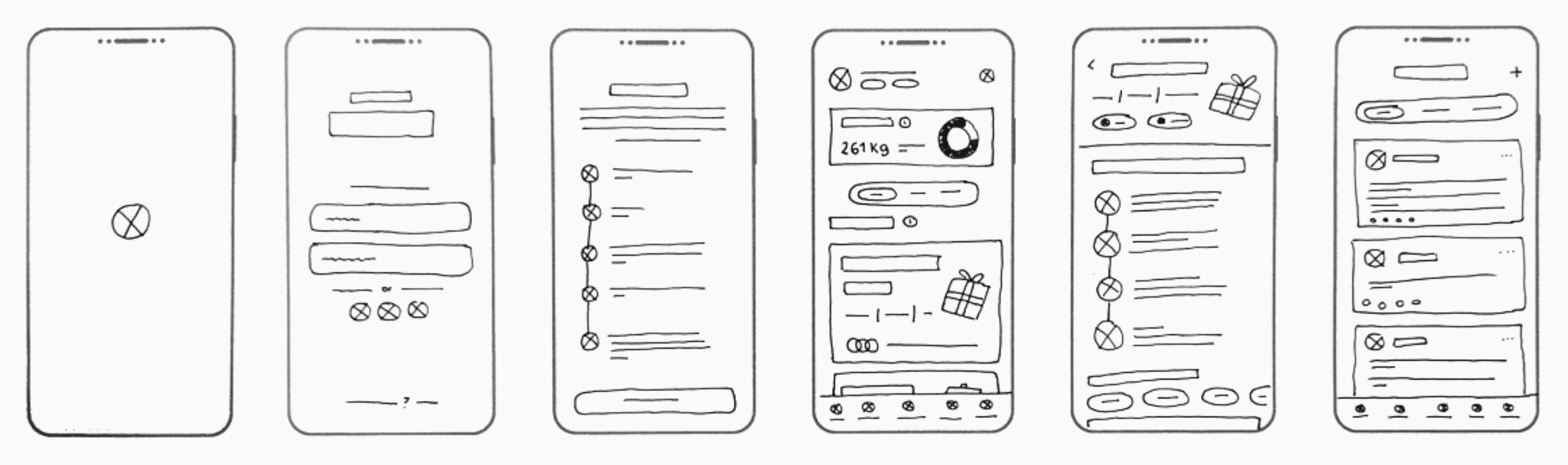
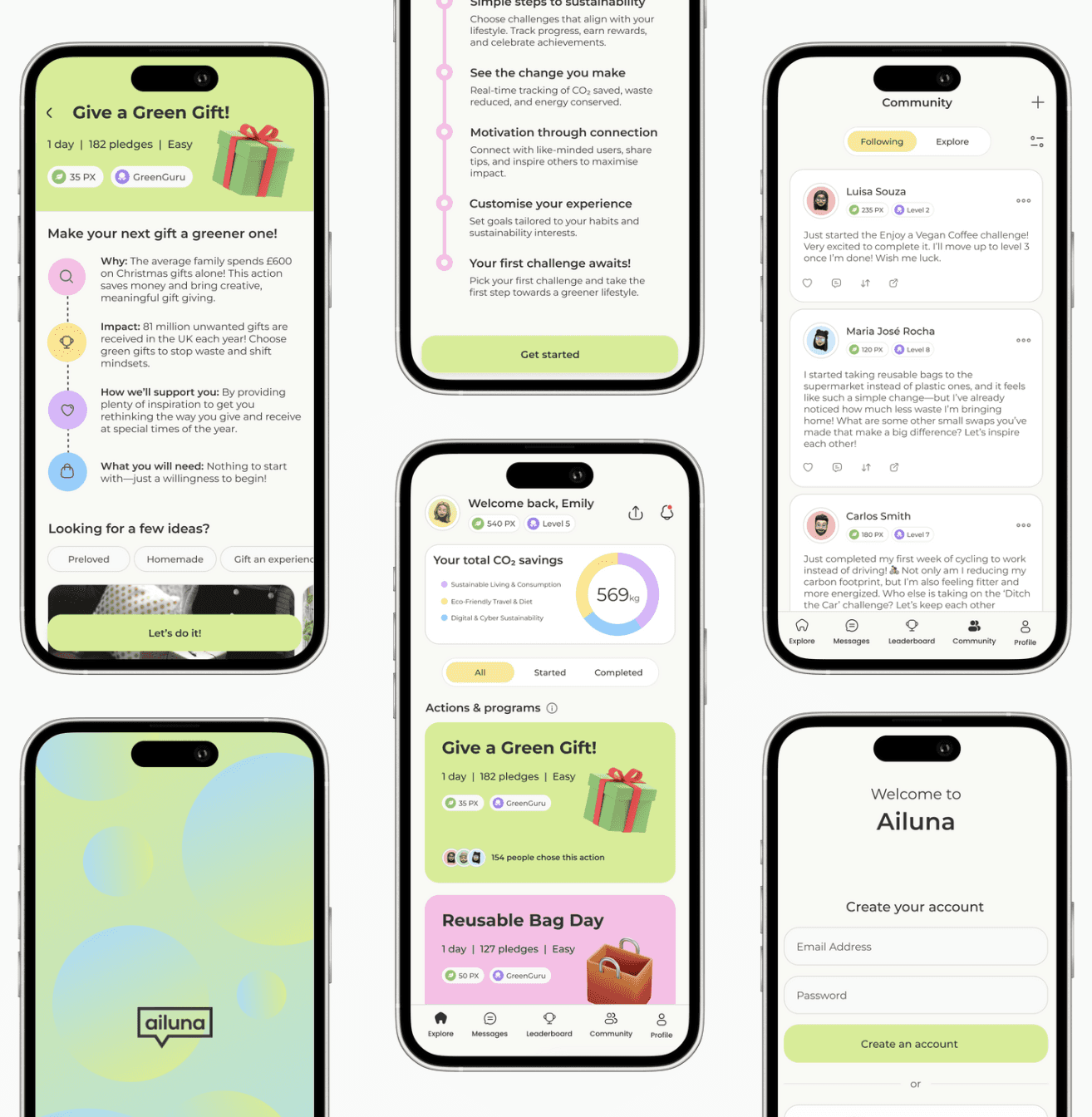
Final Concept
The redesigned Ailuna 2.0 included:
Log-in & Sign-up: Google, Apple, and Facebook options for ease of use
Onboarding: Clear, concise, and engaging introduction
Home: A personalised impact report front and centre
Challenge Overview: Visual instructions, user reviews, and clear progress tracking
Community: Open to all users, with group challenges and leaderboards
Measuring Success & Impact
To validate the redesign, I defined key KPIs and UX metrics and tested them through surveys and usability sessions. Goals included increasing user satisfaction (NPS +10), achieving a 90%+ task success rate, 60–70% challenge interaction, 20–30% higher gamification engagement, and reducing abandonment by 10%+. Testing showed strong results:
Future Improvements
Add an interactive guided tour with tooltips for feature discovery.
Expand the CO₂ savings report with more detail and comparison over time.
Introduce group challenges and leaderboards for community motivation.
Simplify text-heavy areas with more visuals and illustrations.
Improve rewards with partnerships for eco-product discounts or charity donations.
Lessons Learned
I learned that motivating users goes beyond simply offering rewards. For incentives to be effective, they must resonate with users’ personal values and goals, such as saving money, supporting green causes, or feeling a sense of accomplishment.
I also discovered that users respond to meaningful feedback and interactivity, like progress tracking or leaderboards which help them feel connected and engaged. Finally, this project reinforced the importance of observing real user behaviour, because assumptions about what motivates people don’t always match how they actually interact with a product.