👀 Digital World
For the Working in a Digital World module, I focused on developing a professional online presence that effectively showcases my skills and design identity. This involved building a personal portfolio website, refining my existing LinkedIn profile to better reflect my experience and projects, and designing a professional business card.
Introduction
This portfolio project presents the outcome of my skills audit, highlighting development across web, UX, UI, graphic and service design. It aims to showcase my multidisciplinary abilities through a cohesive digital and physical presence, integrating personal interests such as poetry to communicate creativity, adaptability and a reflective design identity.
Defining My Visual Style
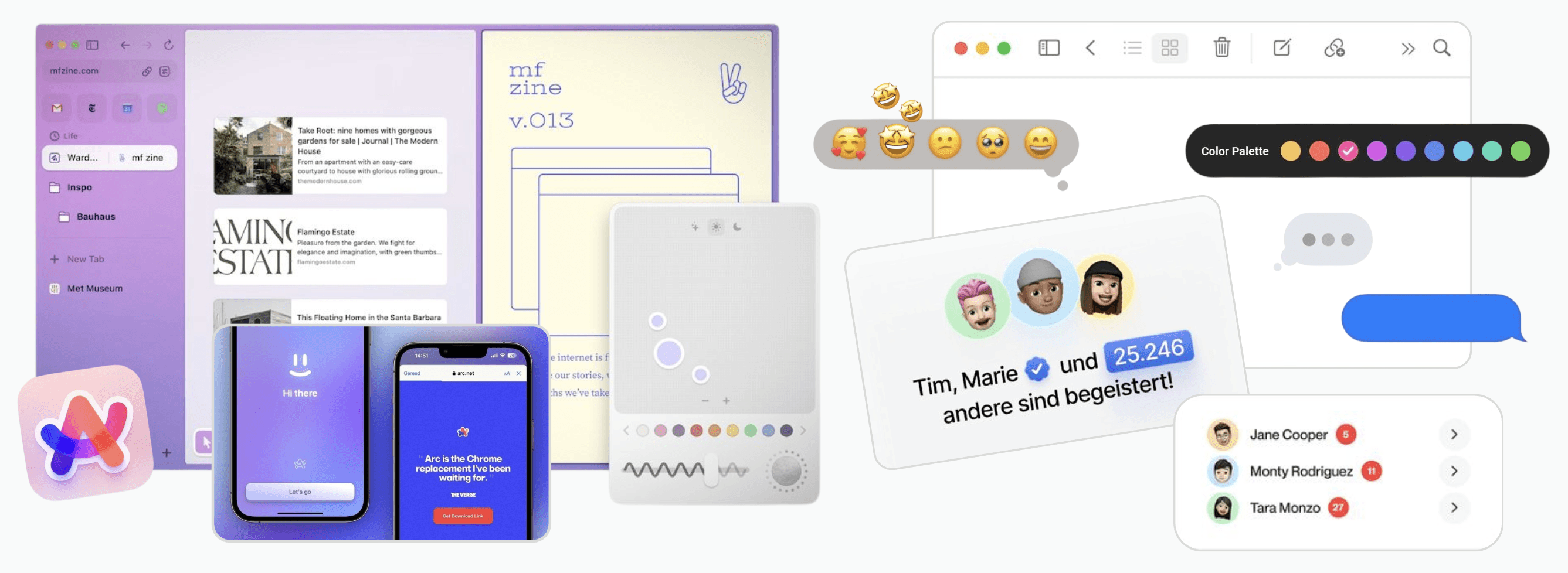
Influenced by Apple's harmony principle and Arc’s focus on innovation, my personal style emphasises simplicity, creating interfaces where every detail has purpose and nothing feels excessive (Apple, 2025). I aim for designs that feel effortless and intuitive, removing noise so users can focus on what matters most. I see my style as invisible design: simple, understated, and functional, where aesthetics and usability combine.
Sketches and Early Reflections
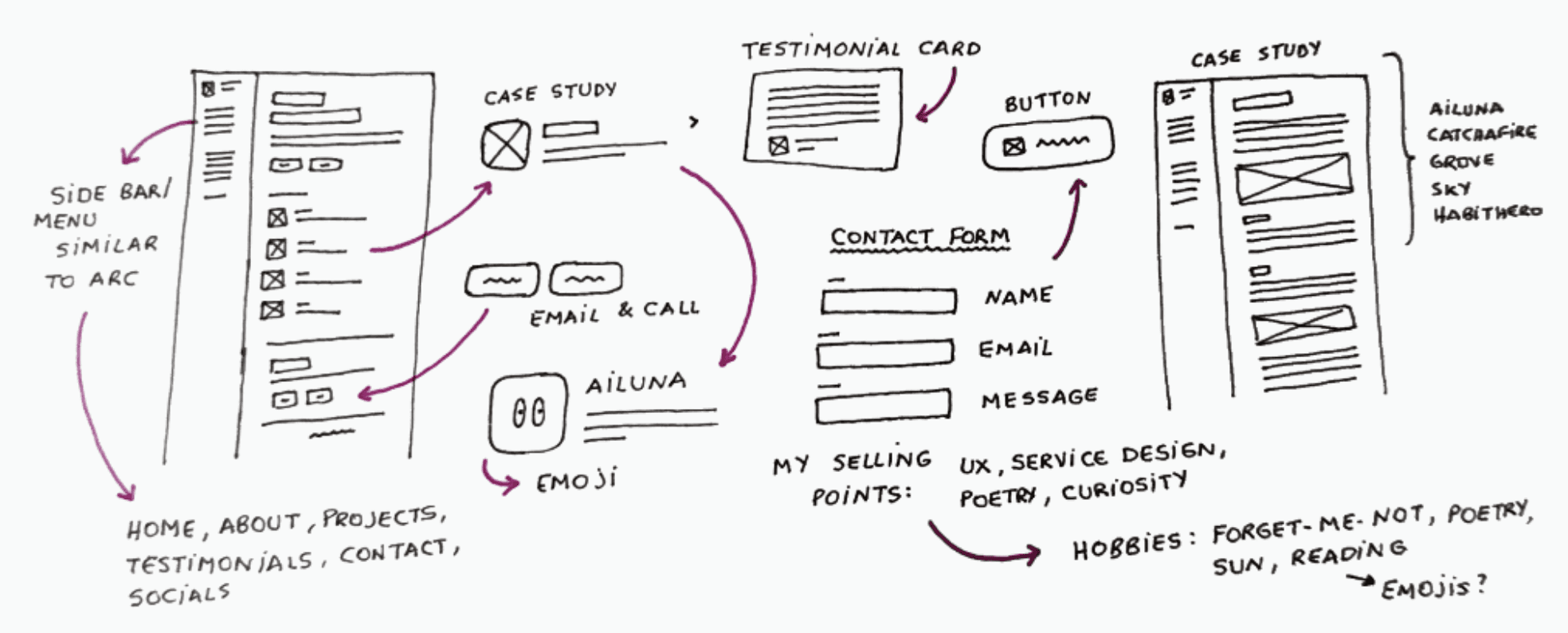
Guided by Krause’s (2019) advice to reflect on who I am as a designer, I set out to create a portfolio that feels personal and distinctive. Inspired by Arc’s innovative design, I combined my interests in poetry and emojis with testimonials from lecturers and clients to express authenticity, creativity, and versatility.
Design Tool Selection & Reasoning
When deciding how to create my portfolio, I wanted to challenge myself and expand my skills, so I chose to work with Framer, a tool I had not used before but which has rapidly become one of the leading platforms in digital design (Imamović, 2023). I began with the pre-existing Easyfolio template by Patryk Ilnicki to establish a clear structure, but through editing and refinement, I was able to adapt and elevate it into a unique site that reflects my personal design identity.
Style Guide and Design Principles
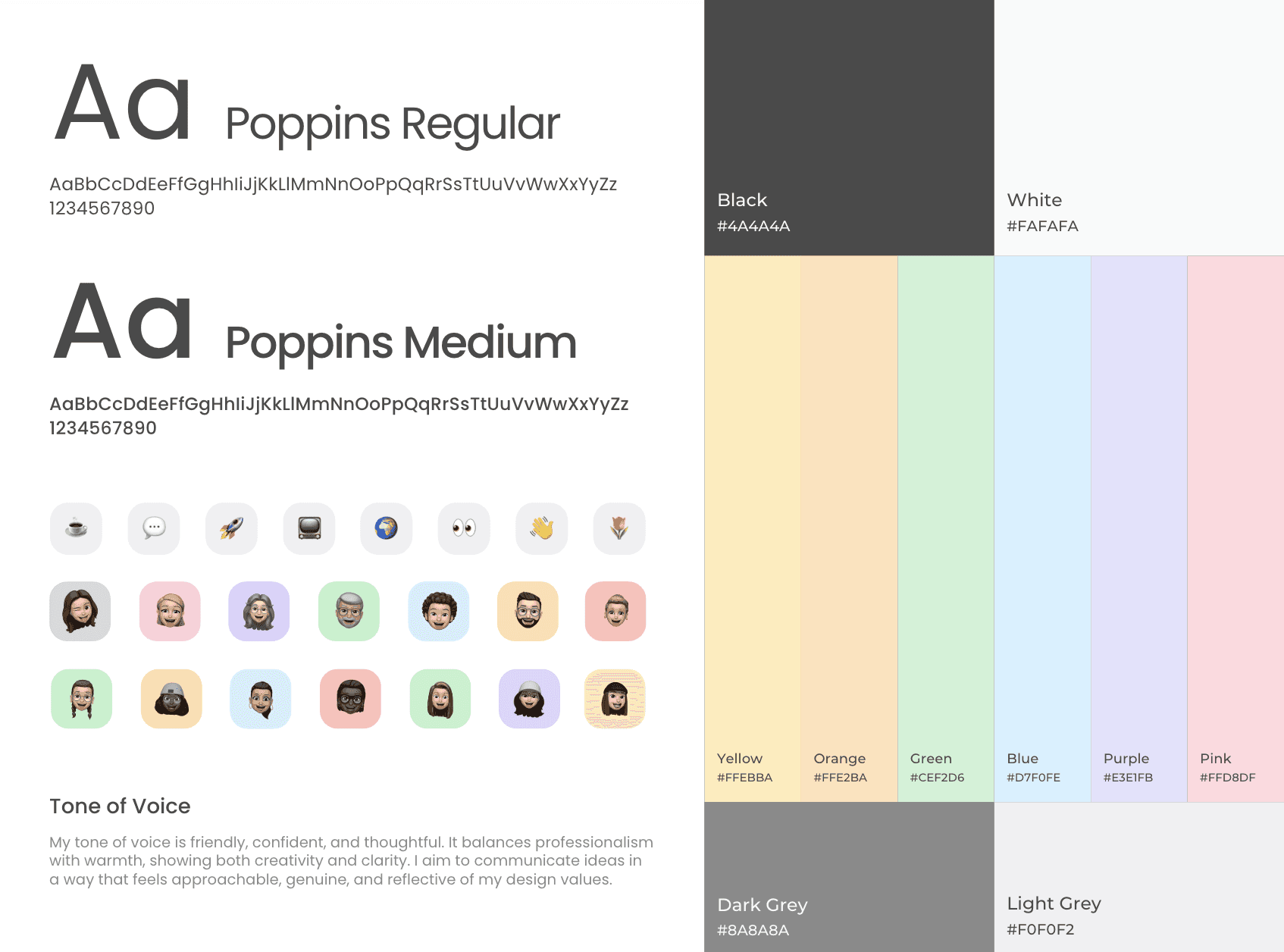
The style guide developed from my mood board, inspired by Apple’s simplicity, Arc’s playful colours, and my love of emojis. It defines colour, typography, imagery and accessibility standards, balancing minimalism with personality. I also applied UX principles, including Hick’s Law for simplicity, Gestalt for clarity, and accessibility guidelines to ensure a friendly, usable, and professional visual identity.
Work in Progress
My goal was to use only the basic structure of the chosen template while infusing it with my personal style. I experimented with various ways to showcase my case studies, testing different layouts and visual hierarchies to find a balance between clarity, personality, and a cohesive user experience.
Peer Feedback and Iterative Improvements
Peer feedback played a key role in refining my project. I slowed down the animations after feedback that they felt too fast, making transitions smoother and easier to follow. I added job roles beneath each team member’s name in the shoutouts to make their contributions clearer. Reviewers also suggested adding more detail to my research and insights, so I included the number of participants, demographics, and observation time for stronger context. I replaced the conclusion with a Lessons Learned section to better communicate personal growth, and visually highlighted the project’s impact to make the outcomes more tangible and engaging.
Final Designs and Outcomes
The final design brings together my business card, portfolio, and LinkedIn profile under one cohesive visual identity. Consistent tone, typography, and colour choices create a unified personal brand that reflects my personality while showcasing my design skills and professional strengths across digital and print touchpoints.