🚀 HabitHero
HabitHero is a wellness app designed to help health-conscious adults build lasting routines. Early MVP feedback showed that users struggled to track progress, causing frustration and drop-offs. I redesigned the experience to make progress tracking intuitive, motivating, and accessible for both neurotypical and neurodiverse users. The redesign increased retention by 70% and strengthened motivation through clear, engaging visual feedback.
Problem
Limited visibility: Users couldn’t easily see or celebrate achievements.
Low motivation: Lack of feedback and personalisation reduced engagement.
Feature overload: Notifications felt intrusive; social tools underdelivered.
Accessibility gaps: Visual clutter and inconsistent navigation made the app difficult for neurodiverse users.
Research & Insights
To better understand the barriers to habit retention, I combined user interviews, behaviour analysis, persona development, and a competitive case study of Duolingo.
From user interviews and behaviour mapping, three clear themes emerged:
Social Accountability: 100% of participants valued social features (challenges, friend activity) to stay accountable.
Visual Progress: 75% said streaks, milestones, and visual feedback motivated them to keep going.
Feature Fit: 50% saw no use for the scanner tool, highlighting the need to prioritise features that fit naturally into daily routines.
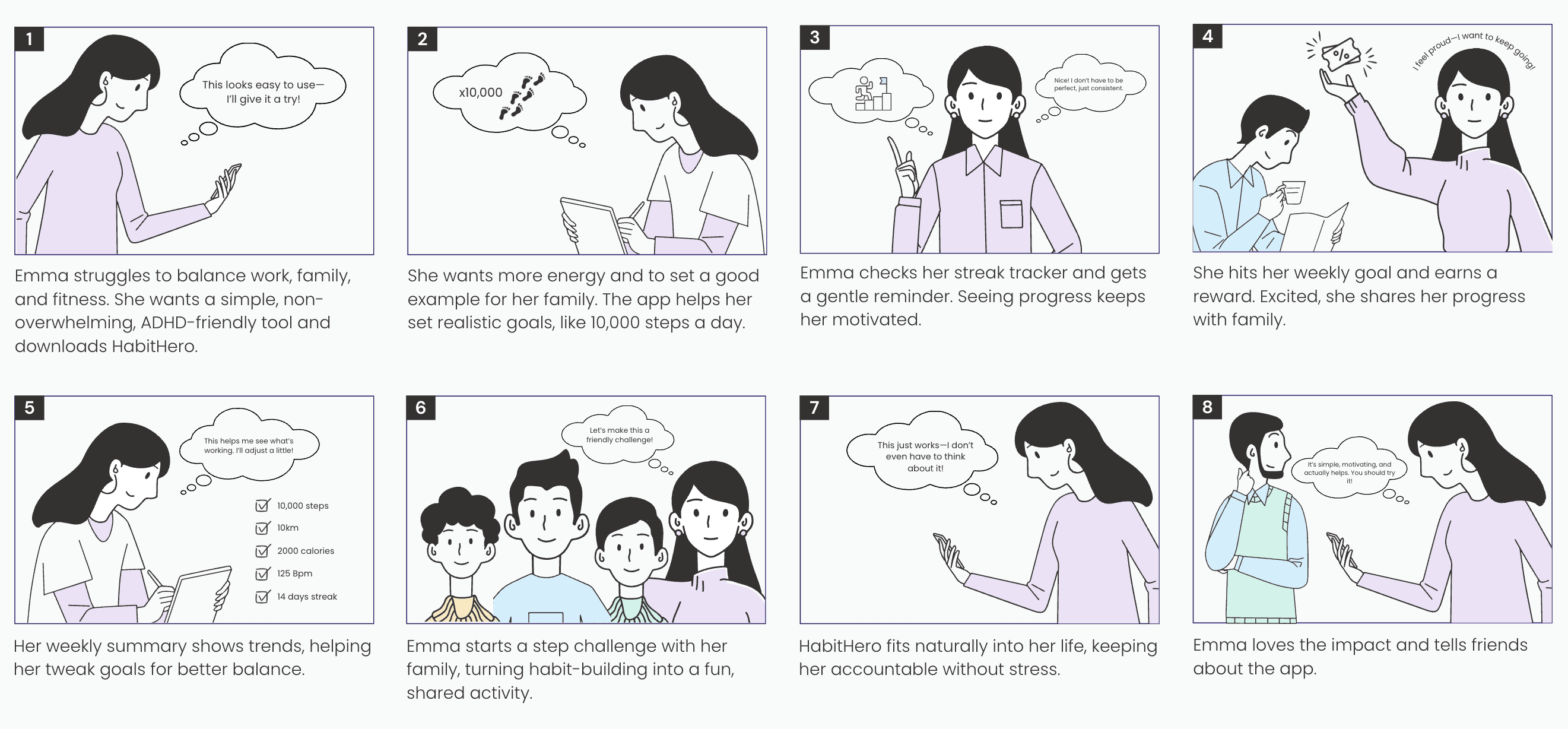
To bring these insights to life, I created a persona called Ambitious Emma, a 45-year-old marketing professional with ADHD. She wants to stay healthy, reduce stress, and track progress consistently. Emma is motivated by small wins and collaboration but gets frustrated by overwhelming features, intrusive notifications, and poor integration with her busy routine.
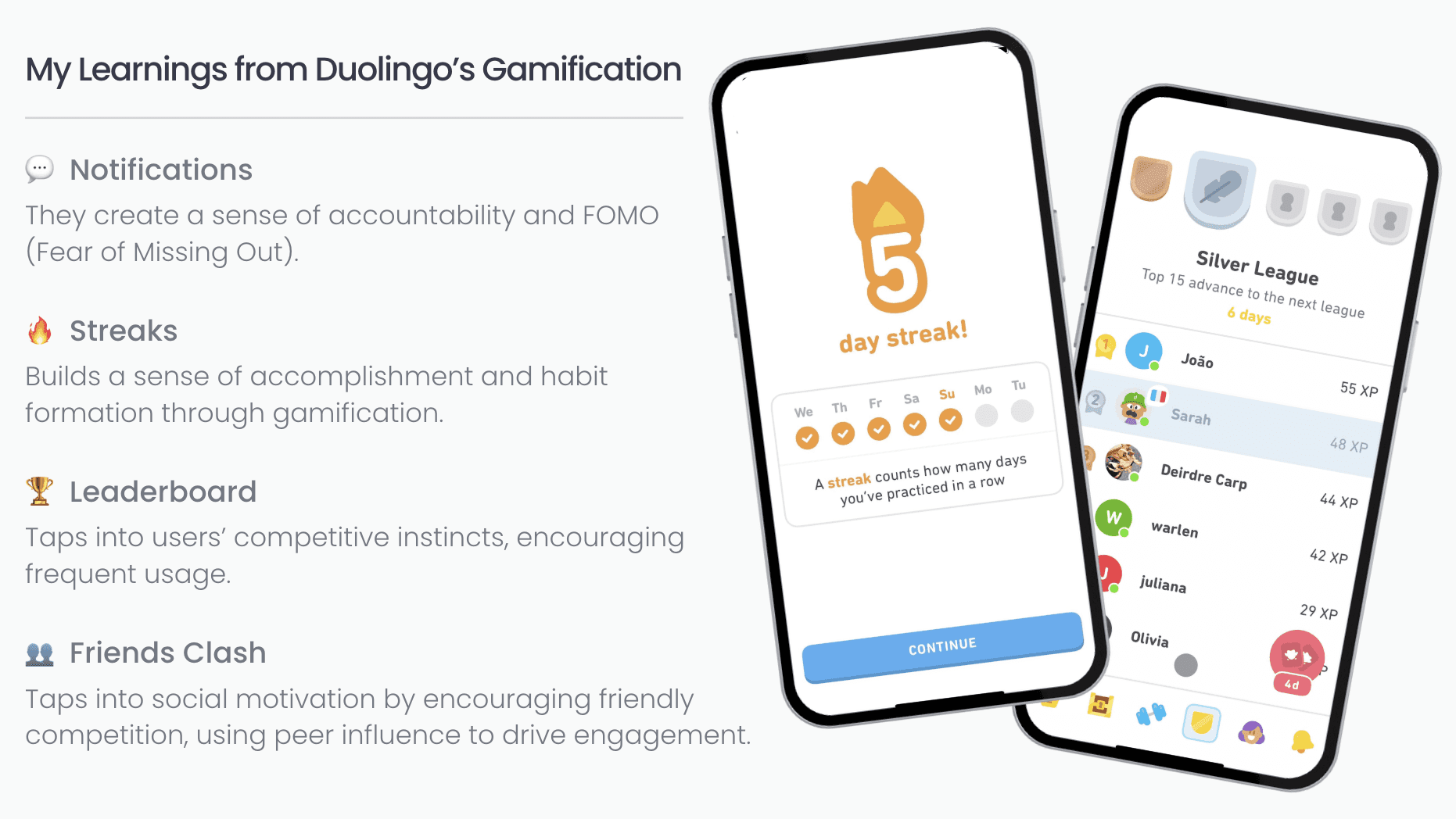
I analysed Duolingo’s gamification, noting how notifications, streaks, and leaderboards motivate users through accountability and friendly competition. This research directly informed my redesign strategy, with a focus on gamification that feels supportive rather than pressuring, progress tracking that makes achievements visible, and social features that foster accountability without guilt.
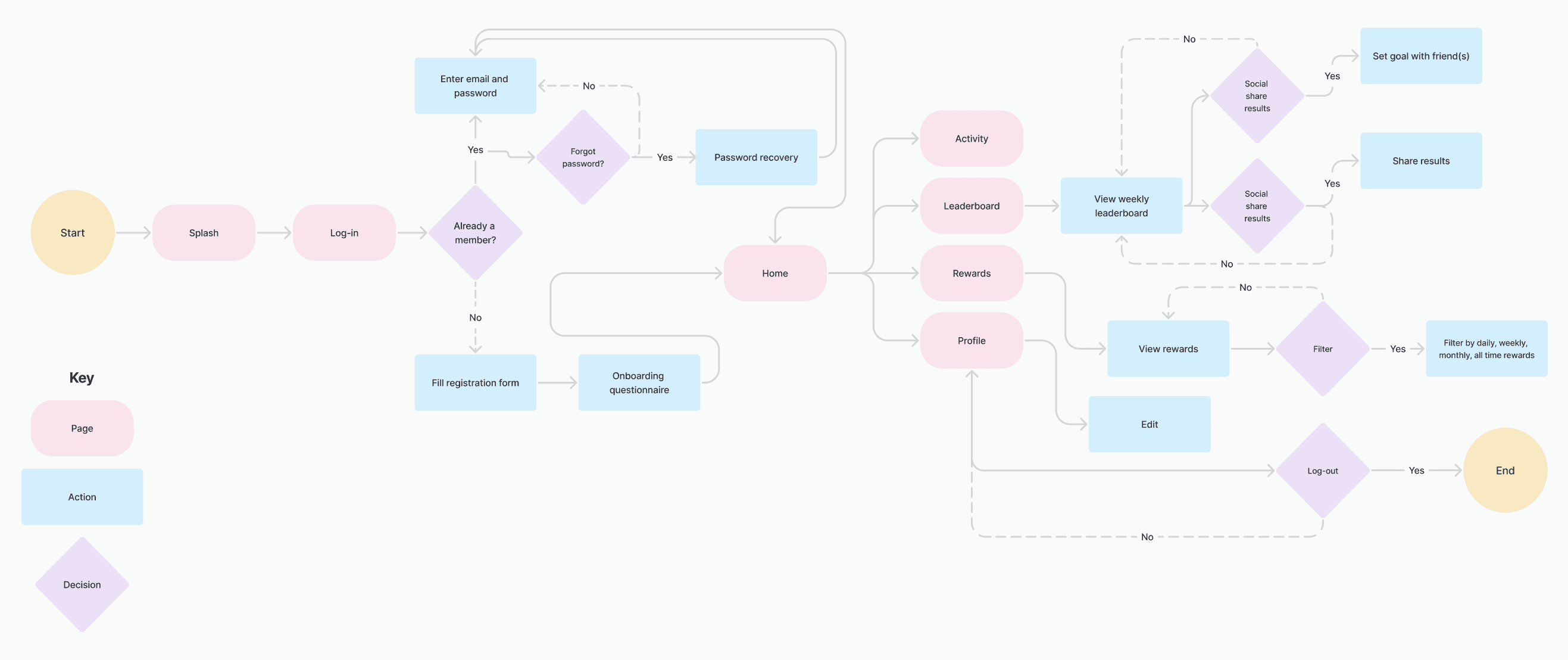
Based on these insights, I mapped out a user flow for HabitHero that prioritises clarity, motivation, and accessibility. Each step is designed to reduce cognitive load, make achievements visible, and seamlessly fit into users’ daily routines.
Proposed Enhancements
Based on research insights, I prioritised the following improvements:
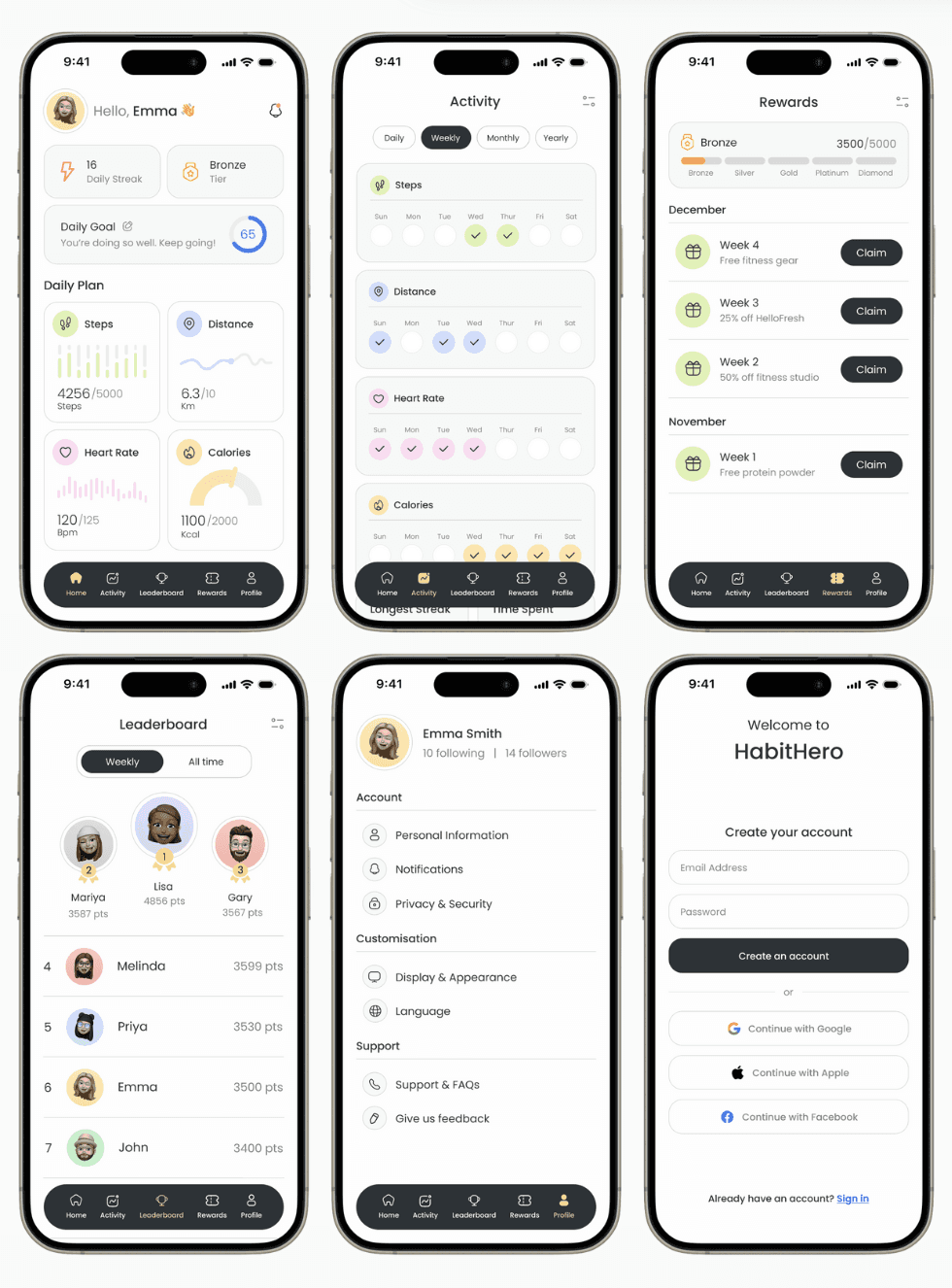
Progress Visibility: Introduce streaks, milestones, and a progress dashboard to keep achievements clear.
Social Accountability: Add collaborative and competitive challenges with flexible privacy settings.
Motivating Gamification: Implement badges and tiered leaderboards to encourage consistency.
Accessibility First: Apply WCAG colour contrast, scalable typography, and predictable navigation.
Neurodiverse Support: Reduce visual clutter, streamline task flows, and offer customisation options (dark mode, simplified views).
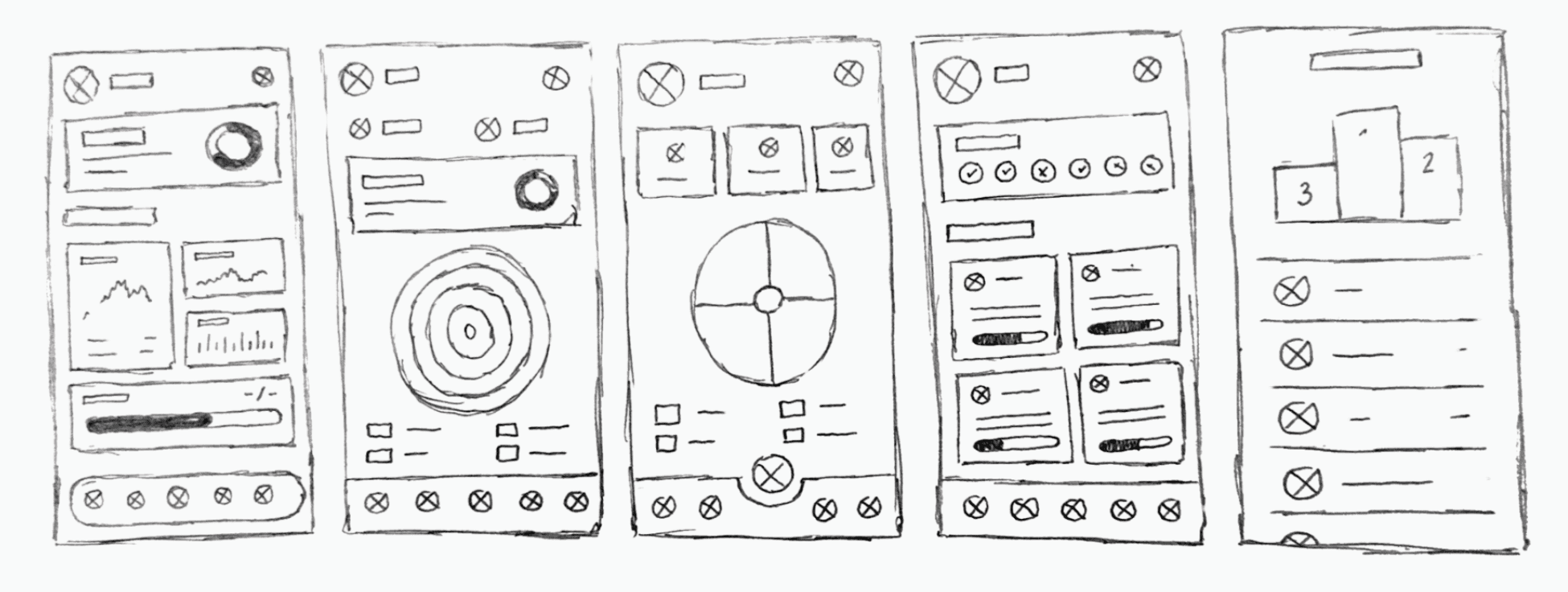
Final Concept
Based on user feedback, I refined the design to better meet user needs. The final concept integrates these improvements, focusing on clearer navigation, more engaging visuals, and streamlined interactions that make forming habits both intuitive and motivating.
Impact & Results
The redesign showed strong potential to increase engagement and retention: